Easy to use— none required for robot expertise
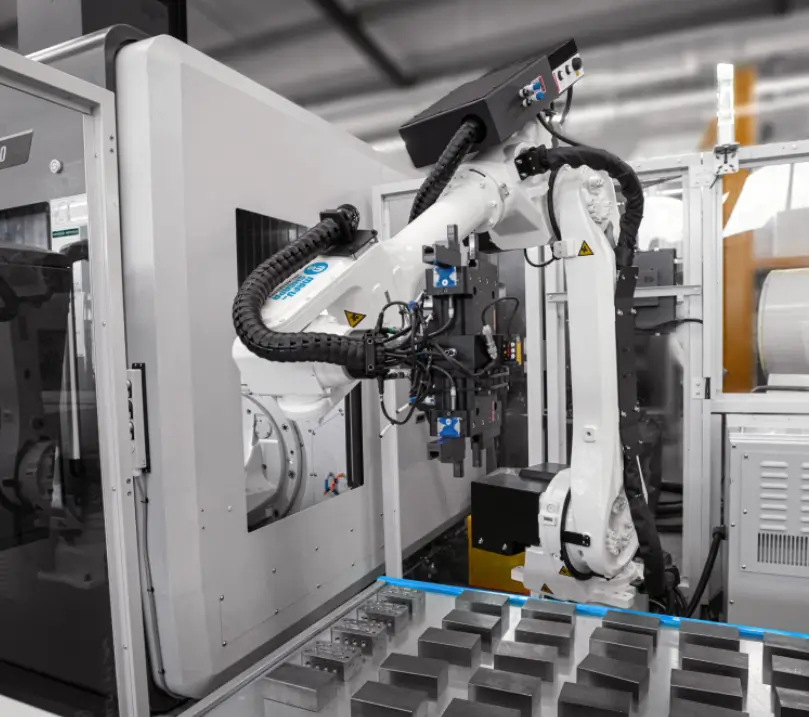
United Machining stands for precision: Brands such as MIKRON MILL, AGIE CHARMILLES, and LIECHTI are among the most powerful machining centers on the market. This makes it all the more worthwhile to unlock the full potential of these machines—through automatic loading and unloading with the SherpaLoader®. The system can be integrated with all standard machining centers, regardless of their year of manufacture. Modern machines are connected via Profibus, Profinet, or EtherNet/IP, while older models are connected via open M functions and potential-free contacts—without requiring additional interfaces from the machine manufacturer. The manufacturer’s warranty on your machine generally remains fully valid, as no modifications to the control system or mechanics are required.
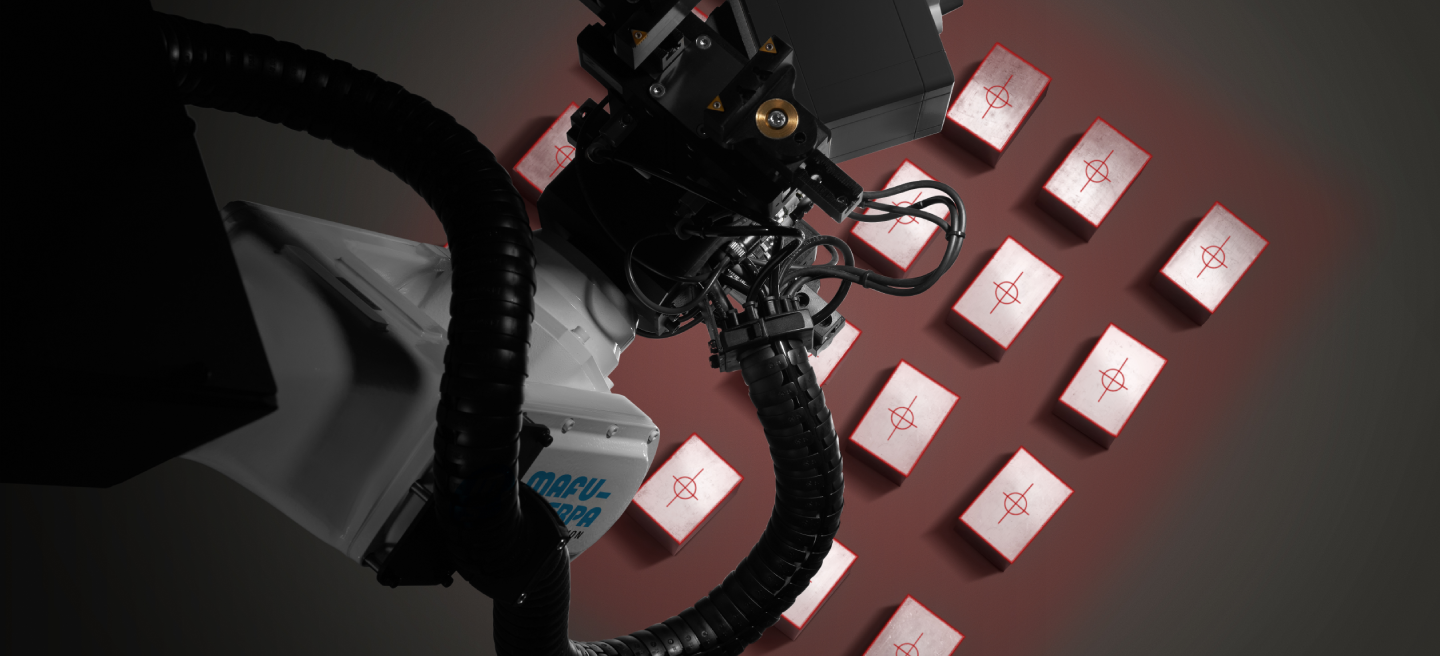
At the heart of the SherpaLoader® is SherpaVision®: an integrated camera-laser system that automatically detects and picks up blanks on table trolleys, pallets, or in the SpaceBox. Whether round bars, square bars, or plate blanks—the robot knows exactly where to grasp them. Grid plates, positioning devices, and complex magazine systems are not required. This saves a considerable amount of time during setup and eliminates sources of error that frequently lead to scrap or downtime in purely mechanical systems. Camera-controlled systems also enable significantly shorter setup times because there is simply no need to adjust mechanical stops.
MAFU-SHERPA handles the complete installation and setup of the robot cell. In most cases, integration is completed within a few days. Even older machines can be integrated without the need for a costly additional interface from the machine manufacturer. After commissioning, your existing employees can operate the system on their own—without any knowledge of robot programming.
Every hour your machine spends waiting for the next Part is wasted capacity. Without automation, milling centers spend a significant portion of their shift time idle—because none of the operators are available or other tasks take priority. The SherpaLoader® automatically loads the machine as soon as a machining operation is complete. A single loading cycle takes about 15 seconds. This keeps the spindle running longer—even during breaks, at night, and on weekends. Customers report a significantly higher daily machine utilization rate while simultaneously reducing staffing requirements.
A workpiece change takes about five minutes with the SherpaLoader®. Because the system is camera-controlled, there is no need to change grid plates, magazines, or mechanical stops. This makes the SherpaLoader® particularly well-suited for companies that handle varying parts and batch sizes ranging from 5 to 5,000 pieces. What is machined on the machine today does not have to be the same tomorrow.
Today, machine operators spend a significant portion of their workday loading and unloading parts. This task is physically monotonous and ties up valuable employees in a task that requires none of the specialized knowledge. The SherpaLoader® handles loading and unloading completely and automatically.
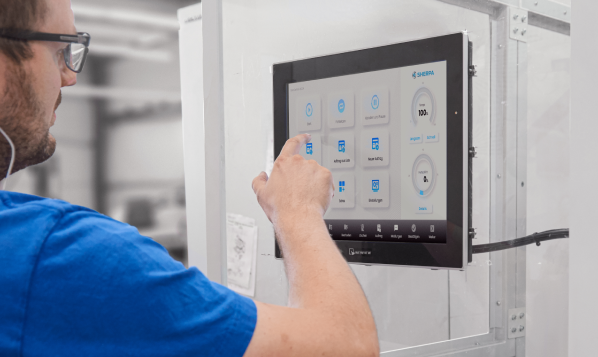
The SherpaLoader® is operated via EasyControl: a dialog-driven user interface on a 17-inch touchscreen display. New Jobs are configured step by step using graphically enhanced input screens—no programming knowledge required. The interface is designed so that even employees with no experience with robotic systems can be productive right away.
The SherpaLoader® features a secure remote maintenance interface. In the event of a service issue, the robot is diagnosed remotely and, if necessary, optimized immediately—without the need for a technician to travel to the site. If on-site intervention is required, a network of authorized service partners is available—usually within a few hours’ drive. This minimizes downtime and provides planning certainty—even during ongoing series production.
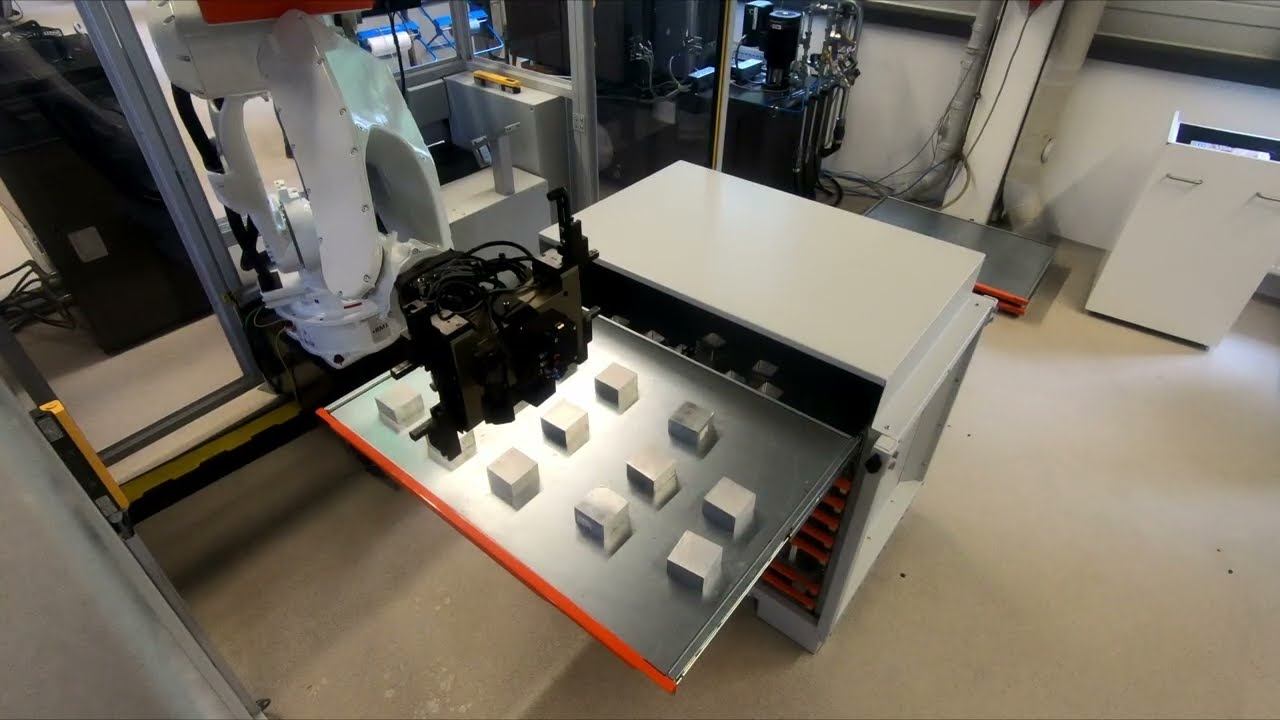
The GF Machining MILL E 700 U—a 5-axis machining center from United Machining’s previous product line—is already operating successfully with the SherpaLoader® M25. The blanks are fed via a SpaceBox with multiple drawers. SherpaVision® uses a camera to detect the position of each part, retrieves it regardless of its orientation, and guides it to the integrated alignment station. There, the part is positioned against a mechanical stop before the robot transfers it with repeatable precision into the machine’s vise. While the machine is performing machining, the SherpaLoader® is already aligning the next blank—thereby reducing downtime to a minimum. The video about the facility is available on the MAFU-SHERPA website:
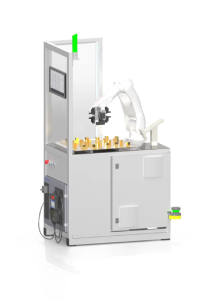
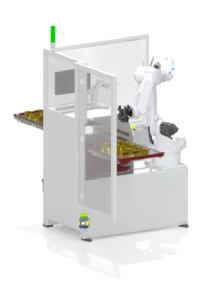
For small and lightweight workpieces, the SherpaLoader® M7 and the SherpaLoader® M12 are the ideal solutions. The M7 is suitable for rectangular bar stock weighing up to 4 kg, and the M12 for rectangular bar stock weighing up to 8 kg, as well as for compact parts measuring up to 150 x 150 x 150 mm.
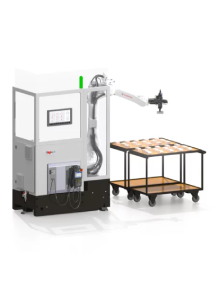
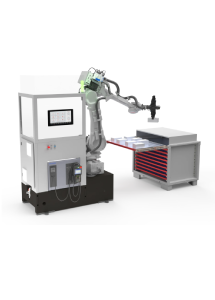
For medium-weight workpieces, the SherpaLoader® M25 and the SherpaLoader® M50 offer the appropriate performance range. The M25 is designed for parts weighing up to 18 kg and measuring up to 200 x 200 x 200 mm, while the M50 is designed for parts weighing up to 38 kg and measuring up to 300 x 300 x 300 mm.
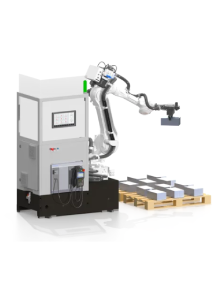
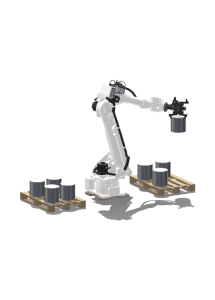
For heavy and large-format workpieces, the SherpaLoader® M88 and M225 are available. These models are designed for high payload, stable operation, and reliable automation in demanding, project-specific production environments.
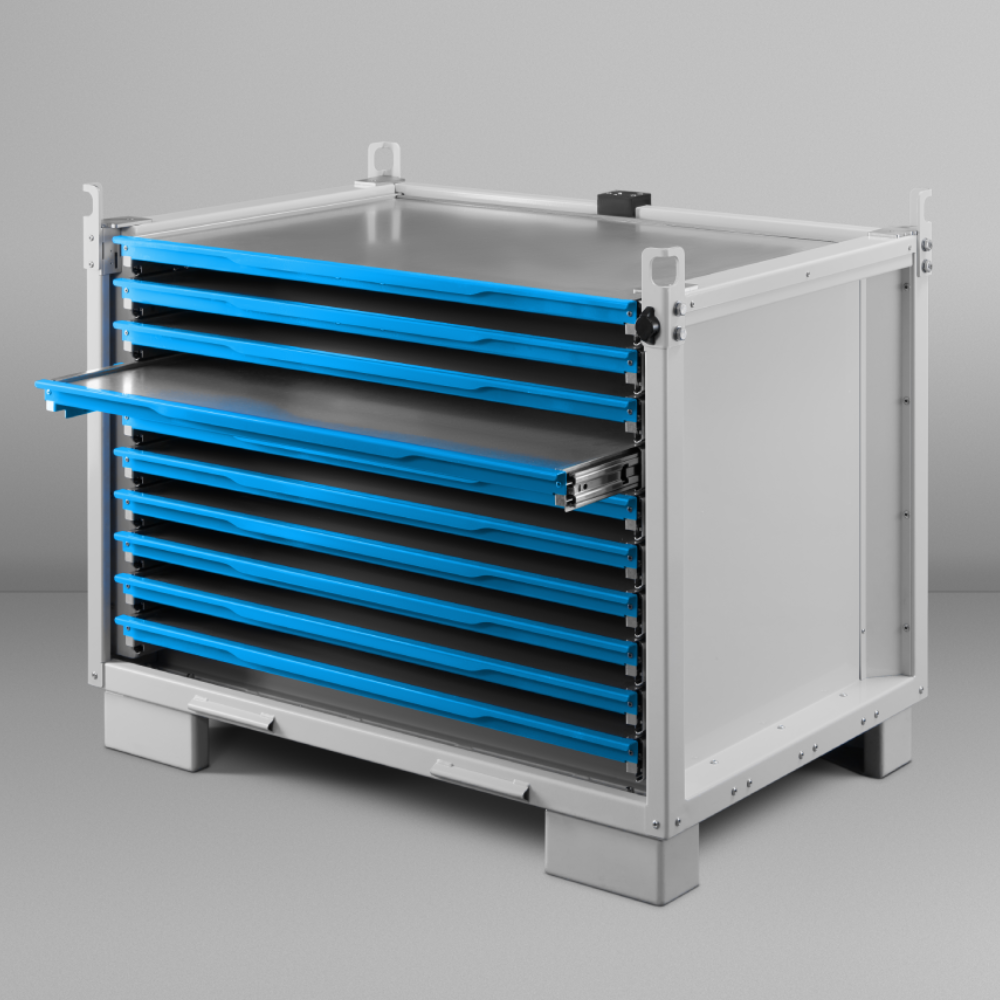
The SpaceBox is a mobile parts storage unit in Euro-pallet format (1,200 × 800 mm). Distributed across up to ten individually removable drawers, it offers a usable storage area of up to 12 m². This space can hold over 3,000 small parts—enough for many hours or even days of autonomous operation.
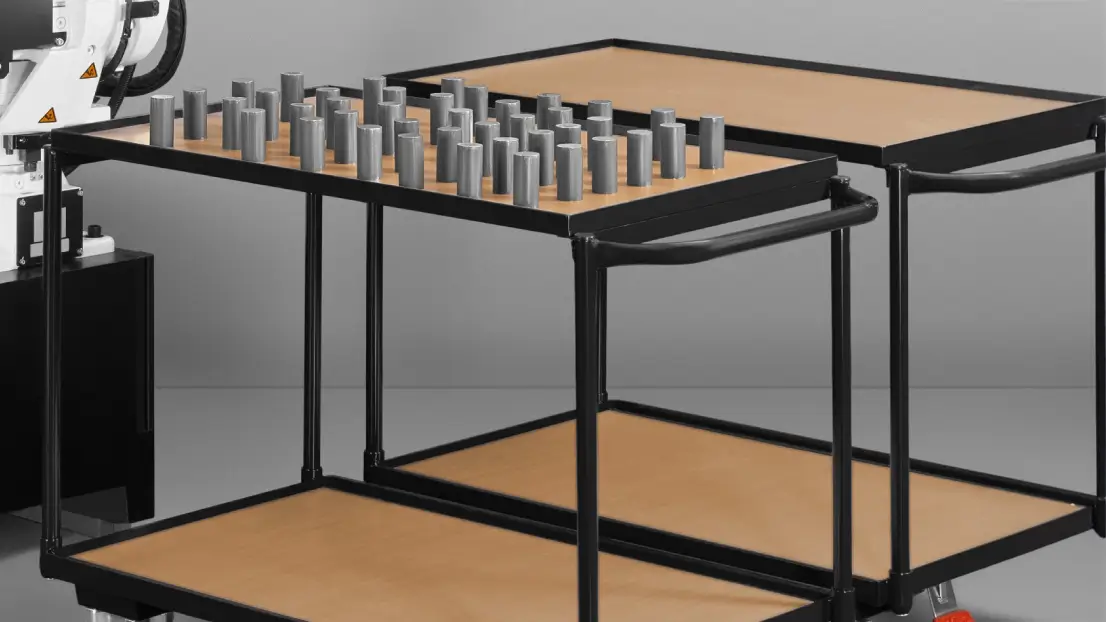
For small batches, one-off parts, or frequently changing parts, the table trolley is the ideal material-handling solution. The standard dimensions are 1,000 × 600 mm; custom sizes are available upon request. The trolley is loaded manually and easily docked to the robot station. SherpaVision® precisely identifies the parts on the surface—even when they are arranged irregularly. The next table trolley can already be prepared while the robot is still processing the previous one. This allows material changes to be seamlessly integrated into ongoing operations without interrupting production.
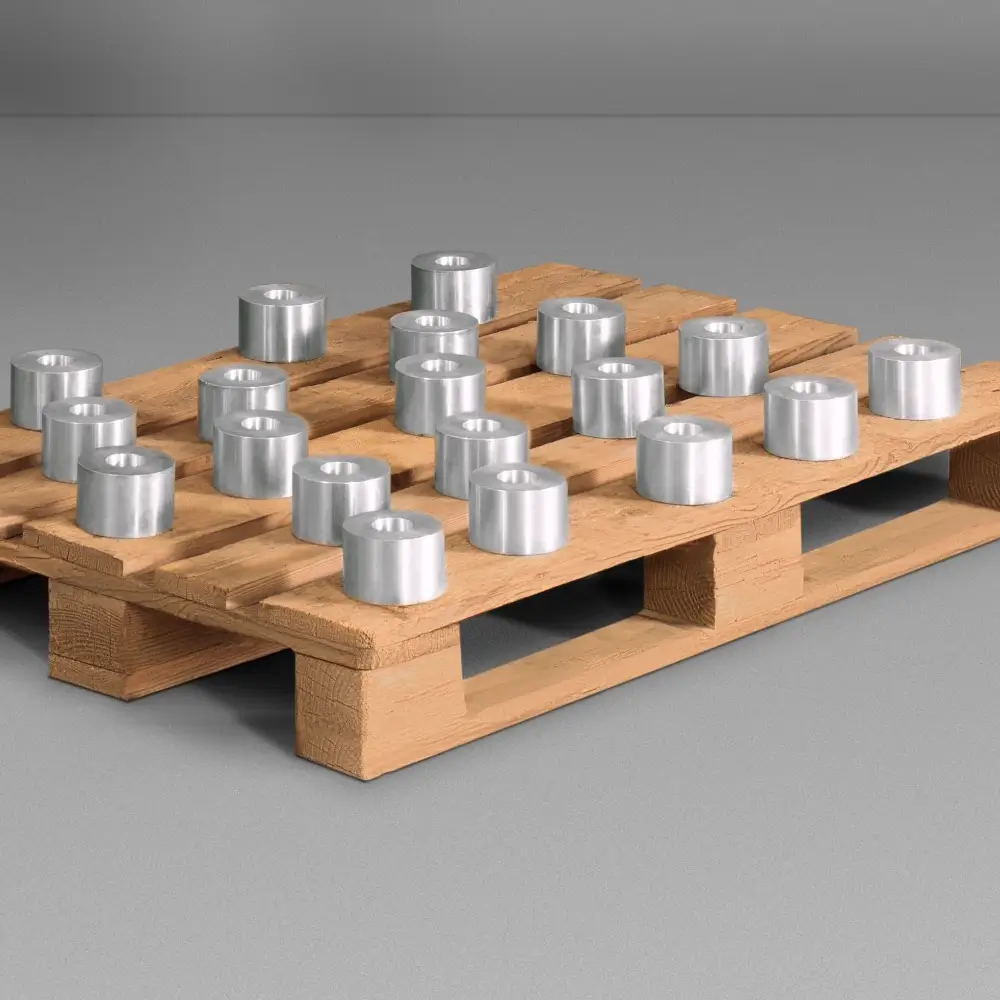
Pallet solutions are used when heavy blank parts need to be handled automatically. The pallet concept is ideal in situations where parts are too large or too heavy for table trolleys and SpaceBoxes, but still need to be transferred safely and with repeatable accuracy.
Thanks to its universal interface, the SherpaLoader® can be connected to all standard lathes and milling machines —regardless of when they were manufactured. This means that the same SherpaLoader® can be used for retrofitting an existing machine in your fleet or to automate a new machine.































Basically, all standard processing machines. Depending on the machine, connectivity is provided via Profibus, Profinet, EtherNet/IP, or custom M functions.
Usually a few days. MAFU-SHERPA handles the entire installation, setup, and training of the operating staff.
Typically in less than 12 months. The main drivers are increased spindle time, reduced labor costs, and less scrap due to more consistent process control.
Yes, generally speaking, completely. The SherpaLoader® does not interfere with the machine's control system or mechanics—the connection is established exclusively through existing interfaces.
No. EasyControl guides the operator through the job setup using a dialog-based interface—no prior knowledge or training required. A workpiece change takes just a few minutes.
The SherpaLoader® can be retrofitted to a new system—preserving your investment. Thanks to its universal interface, the system is compatible with a wide variety of machine types from different manufacturers.
Machines without a powered safety door can be retrofitted with an electric door drive from MAFU-SHERPA. The SherpaLoader® then opens and closes the Machine Door fully automatically—without any manual intervention.
The process begins with a consultation. MAFU-SHERPA works with you to analyze your machine, your range of parts, and your batch sizes—and recommends the appropriate SherpaLoader® model. The MAFU-SHERPA technical team then performs the complete installation. Afterward, you and your team will receive hands-on training right at the production line: practical, requiring no prior knowledge, and using actual parts from your production process. From that point on, the SherpaLoader® operates independently. The entire process is streamlined, predictable, and designed to minimize disruption to ongoing operations.
For an initial consultation, you can reach us by Telephone or email. We’ll discuss which machines from the United Machining portfolio can be automated, which model is best suited for your manufacturing needs, and what the specific ROI looks like. There’s none of the standard, off-the-shelf offers—every solution is tailored individually to your operation. Anyone with questions about compatibility will receive an honest assessment—even if the answer is that next the details need to be reviewed.
We would be happy to show you and your team how to start and use the SherpaLoader® without any previous knowledge.
Give us a call
Write to us