Camera-based workpiece detection instead of mechanical magazines
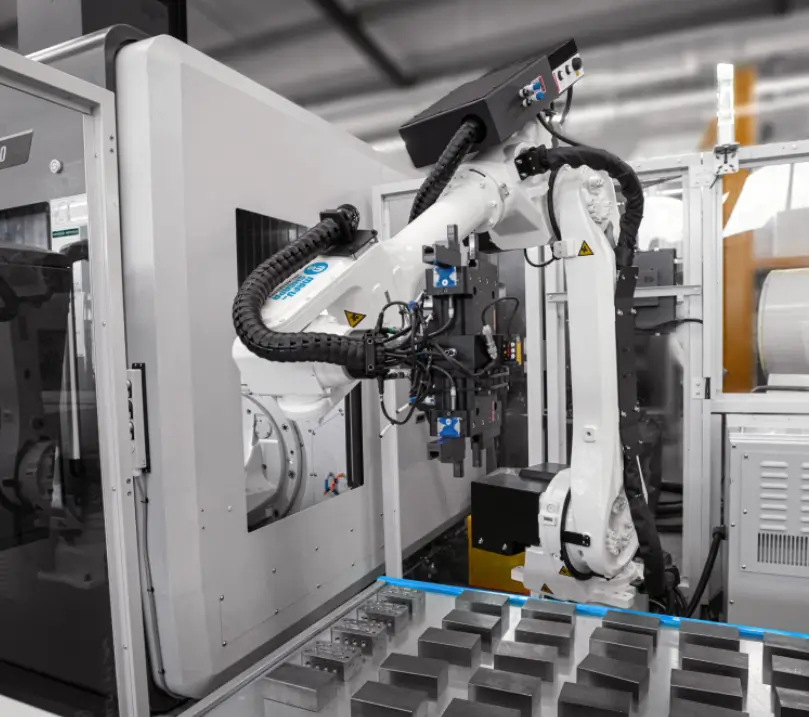
Would you like to operate your Alzmetall GS machining centers more efficiently and make better use of the spindle time on your 5-axis precision machines? MAFU-SHERPA CNC automation offers camera-guided robotic solutions for existing GS machines that allow cost-effective retrofitting—regardless of their year of manufacture or control system generation. Whether it’s a GS 600, GS 800, GS 1000, or larger models: Automation is possible for all common Alzmetall machining centers, delivering precision and productivity. The SherpaLoader® complements the high machining quality of Alzmetall machines with reproducible workpiece feeding—and relieves skilled workers of routine tasks.
Non-binding adviceAlzmetall machining centers are known for high-precision 5-axis machining in tool and mold making, series production, and the aerospace industry. Such machines represent a significant investment—their cost-effectiveness depends directly on the number of productive spindle hours. Without automation, however, an Alzmetall machine often stands idle for 16 hours a day because an operator is not always available. With the SherpaLoader®, the machine continues to run even at night and on weekends, consistently maximizing the precision potential of the “ .”
In typical Alzmetall manufacturing operations, complex 5-axis programming, quality inspection, and process optimization are the truly demanding tasks. Manual loading and unloading ties up the same personnel in routine tasks who are actually needed for tool management and process development. With the SherpaLoader®, the robot takes over workpiece handling, while the machinist focuses on the tasks that require their expertise. A single operator can monitor multiple automated machines simultaneously—this alleviates the shortage of skilled workers without sacrificing the team’s collective experience.
With manual loading, the position and clamping force vary—which affects the dimensional accuracy of the first operation. On Alzmetall machines with tight tolerances, this can mean the difference between a good part and a scrap part. The SherpaLoader® positions each workpiece with identical precision and places it reproducibly into the clamping device. This ensures that machining results remain consistent throughout the entire production run—an advantage that pays off especially when manufacturing complex mold parts and aerospace parts.
The compact models in the GS series are designed for highly dynamic machining applications in tool and mold making, prototype manufacturing, and electrode production. With the SherpaLoader®, these machines can be loaded through the front or side door without blocking access to the tool magazine or chip conveyor. The SherpaLoader® M Series accommodates workpiece weights ranging from a few grams to 38 kg.
Since its introduction, the GS 1000 has established itself as Alzmetall’s flagship model for 5-side machining. With an expanded machining area and torque drives in the rotational axes, it is used in both series production and for demanding individual parts. The SherpaLoader® M50 or M88 handles workpiece handling here—even with heavy blanks weighing up to 73 kg, typical production runs can be automated.
For the largest models in the GS series, the SherpaLoader® M225 is ideal, as it can handle workpieces weighing up to 175 kg on a project-specific basis. This allows for the automated handling of even heavy castings, steel blocks, and tooling blanks that could only be moved manually with the aid of tools. Important to note: For large, clamped components with long machining times and high setup costs, traditional workpiece automation is not always the most cost-effective solution—an honest assessment is conducted as part of the requirements analysis.
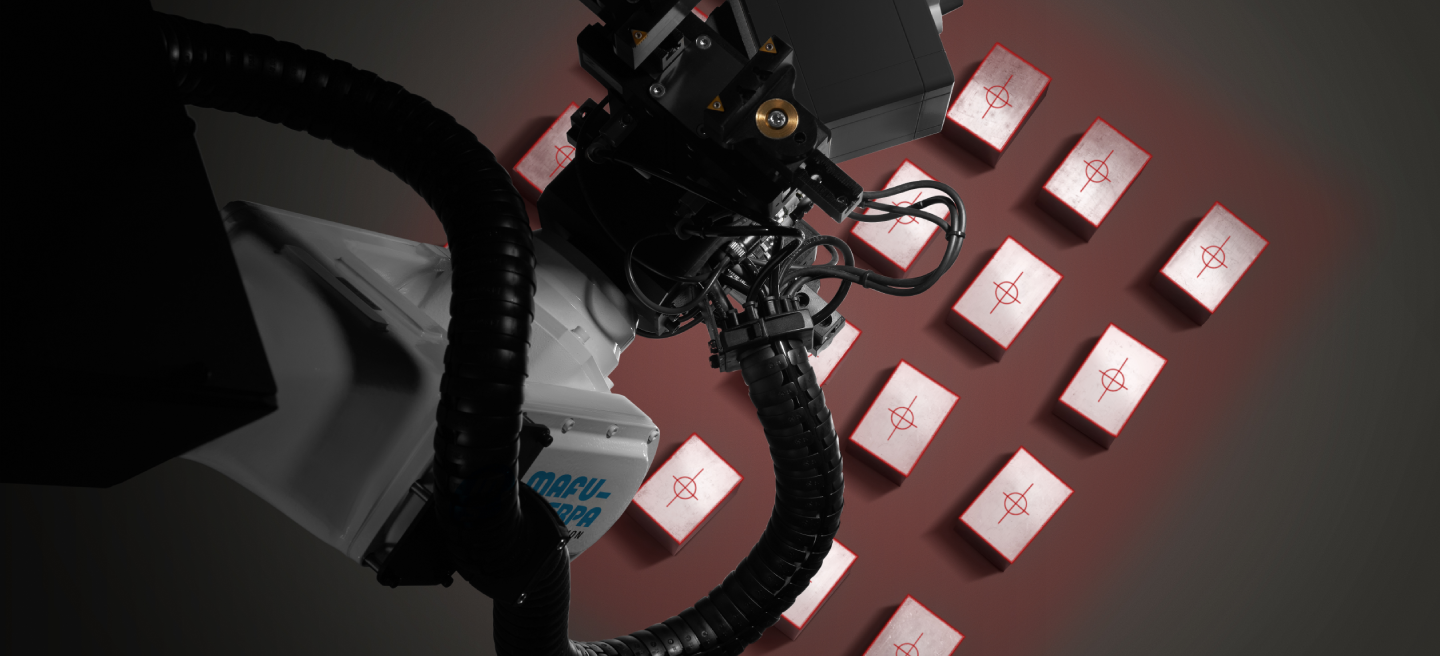
At the heart of the SherpaLoader® is SherpaVision®, a 3D camera and laser system for automatic workpiece detection. The system detects blanks exactly where they are located—without grid plates, without rotary tables, and without precisely fitted matrices. This eliminates the need for the mechanical fixtures that dominate changeover times in traditional loading solutions. An integrated protective flap keeps the optics clean even under demanding machining conditions.
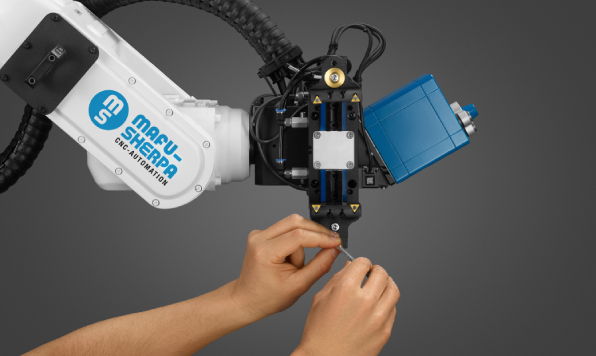
Compared to fixed grid or pallet rack systems, the SherpaLoader® is much faster at retooling. None of the dies need to be swapped or the fixtures modified, so a workpiece change takes less than five minutes. All you need to do is adjust the gripper span to the new part size and select the appropriate job in the dialog control. These short setup times are crucial for Alzmetall users with a mixed range of parts—such as in tool and mold making, where operators switch between different part geometries on a daily basis.
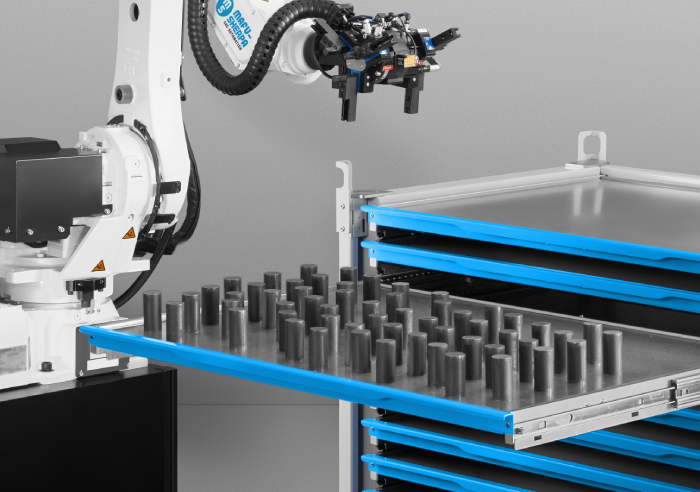
Three types of storage solutions cover the entire range of Alzmetall applications: table trolleys for prototypes and small production runs, SpaceBoxes for medium-volume production, and Euro pallets for heavy or large workpieces. A robot cell can accommodate two SpaceBoxes with a combined storage area of approximately 12 m²—enough space for over 3,000 small parts. For large tooling parts, pallets in the standard size of 1,200 × 800 mm are used. The choice of storage method is based on the quantity, component weight, and available space.
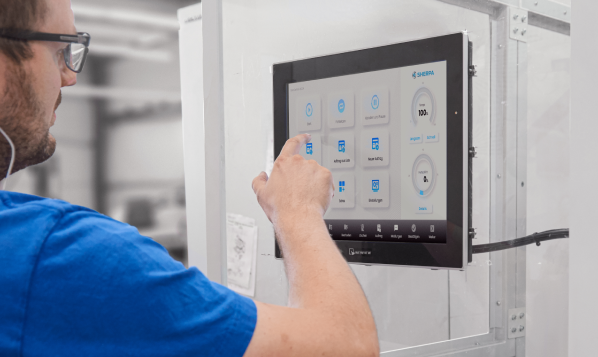
The SherpaLoader® is operated via a 17-inch touchscreen display with intuitive 17-inch dialog control. Operators do not need to be familiar with the Heidenhain or Siemens control systems of the Alzmetall machine or with any robot programming language to set up new jobs. Workpiece dimensions, gripping positions, and placement locations are entered via clear input screens; the system handles the rest automatically. Even employees with no prior experience with robots can produce parts independently after a brief training session.
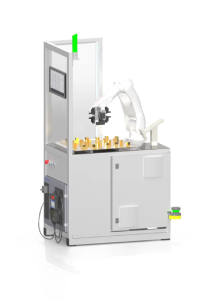
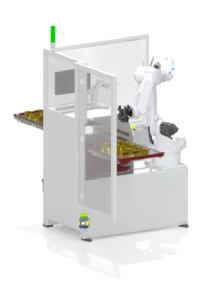
For small precision components used in precision engineering and electrode manufacturing, the SherpaLoader® M7 and SherpaLoader® M12 are the right choice. The M7 handles workpieces weighing up to 4 kg, while the M12 handles up to 8 kg. Both models feature a compact design and are particularly well-suited for the GS 600 and GS 800—anywhere where small, high-quality parts are produced in large quantities.
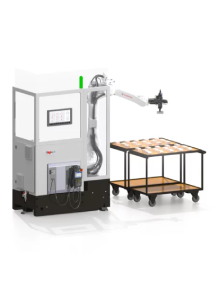
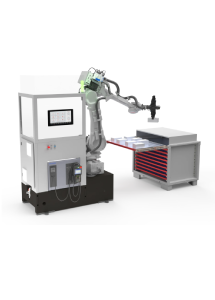
'sSherpaLoader® M25 and 's SherpaLoader® M50 cover the typical range of parts used in series production and toolmaking. The M25 handles parts weighing up to 18 kg, while the M50 handles parts weighing up to 38 kg—making them suitable for steel blanks, aluminum blocks, and mold inserts on the GS 800 and GS 1000. With these two models, most standard Alzmetall applications can be automated cost-effectively.
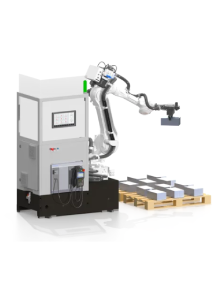
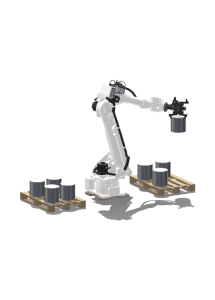
's SherpaLoader® M88 and 's SherpaLoader® M225 are available for heavy castings, steel blocks, and tooling blanks. The M88 handles parts weighing up to 73 kg, while the M225 handles parts weighing up to 175 kg, depending on the specific project. Both models are compatible with the larger GS models, such as the GS 1200 and GS 1400, which are designed to handle heavy workpieces.
Thanks to its universal interface, the SherpaLoader® can be connected to all standard lathes and milling machines—regardless of their year of manufacture. This means that the same SherpaLoader® can be used for retrofitting an existing machine in your fleet as well as for automating a new machine.























For its modern GS machining centers, Alzmetall primarily relies on Heidenhain controls such as the TNC 640, iTNC 530, and older TNC 426/530 models. Siemens controls are also used in some cases. The SherpaLoader® can be integrated with all variants—via digital protocols such as EtherNet/IP, PROFIBUS DP, or PROFINET on modern machines, or via free M functions and potential-free contacts on older models without a bus card. In all cases, the machine’s user interface remains completely unaffected.
The robot cell operates entirely outside the Alzmetall machine and does not interfere with its mechanics or control software. As a result, the manufacturer’s warranty generally remains unaffected, and the ongoing warranty provided by the Alzmetall service partner is not compromised. The specific procedure is agreed upon and documented in advance to ensure clarity for the machine manufacturer and internal stakeholders.
Alzmetall machining centers without a hydraulic or pneumatic rotary feed-through on the 4th/5th axis can be automated using an electric spindle drive. This drive is torque-accurate in controlling the tightening torque at the machine vice—the clamping force is set in the dialog control according to specific job requirements. This means that even older GS models, which were not originally designed for robot automation, can now be used for this purpose.
The turning module allows workpieces to be automatically turned between operations without the need for operator intervention. This enables both the front and back sides to be machined during the same shift. The module is fully integrated into the dialog control system and enables end-to-end, complete machining from the blank to the finished part—even for complex-shaped parts.
The cleaning module blows chips and cooling lubricant off the finished workpieces before they are returned to the material storage area. An additional blow-off device cleans the clamping device in the Alzmetall machine before new blanks are loaded. This ensures cleanliness at the transfer point—which is particularly important for subsequent operations or measurement processes.
The pre-stamping module provides narrow to wide workpieces with defined clamping surfaces, ensuring that the vise is securely seated. The alignment module positions formed parts with repeatable accuracy before they are placed in the clamping device. These two modules meet the high precision requirements of an Alzmetall machine by minimizing positioning tolerances even before the actual machining process begins.
The marking module uses a carbide needle to mark each part with a serial number, date, or order number—integrated into the unloading process. The parting off module allows for the production of multiple semi-finished products from a single blank. Measuring stations or customer-specific stations can also be retrofitted via open interfaces.
When properly configured, the investment in a SherpaLoader® typically pays for itself within 12 months. With high-priced Alzmetall machines, the return on investment is particularly significant because every additional spindle hour on these systems yields a correspondingly high return. A customized ROI calculation is part of the consultation process and clearly illustrates the economic potential for each specific machine.
The greatest potential for efficiency gains lies outside regular working hours. An Alzmetall machine that is loaded with blanks on Friday evenings and runs autonomously until Monday morning gains up to 60 additional production hours per week. This is achieved without night or weekend premiums and without additional operators. Users report daily increases in spindle time of 10 to 14 hours. For toolmaking applications with long machining cycles, this can shorten the lead time for a tooling project by several days.
Alzmetall offers its own automation solution in the form of the robot-assisted pallet rack system. The SherpaLoader® is a manufacturer-neutral alternative—with one key difference: A SherpaLoader® cell can be retrofitted to a single existing machine without any factory preparation and can be operated with the same cell on an Alzmetall, a DMG MORI, or a Hermle machine. In addition, there is no need for pre-loaded pallets, as the camera-controlled system picks up workpieces directly from the SpaceBox or a table trolley. This provides flexibility when working with a mixed fleet of machines.
In principle, all standard Alzmetall machining centers in the GS series can be automated—from the compact GS 600 to the large GS 1400. Even older models with Heidenhain controls, such as the iTNC 530 or TNC 426, can be retrofitted. The key factors are the accessibility of the work area, the clamping equipment, and the available control interfaces.
Yes. Newer Alzmetall machines equipped with the TNC 640 can be connected via digital protocols such as EtherNet/IP or PROFINET. Older existing machines without a bus card are connected in the traditional way using M functions and potential-free contacts—without any changes to the control software. Both methods are proven and work reliably.
The robot cell operates outside the machine and without interfering with its mechanics or control software. As a result, the manufacturer’s warranty generally remains unaffected. The specific procedure is agreed upon and documented in advance to ensure clarity for the Alzmetall service partner.
Preparatory work—installation, electrical connection, and setup of the material staging system—can often be completed while the machine is in operation. The fastest documented installation of a SherpaLoader® took three days, including training. This keeps downtime for the Alzmetall machine to the absolute minimum required for final commissioning.
With a sufficiently large material storage capacity—for example, two SpaceBoxes totaling 12 m² or two Euro pallets—an Alzmetall machine can produce autonomously across multiple shifts. A remote maintenance interface allows for diagnostics and optimization over the network when needed. This enables unmanned night and weekend shifts, which significantly increase capacity utilization.
Every manufacturing operation is different. The range of workpieces, machinery, batch sizes, and available space vary from one facility to another. The first step is a systematic requirements analysis: Which Alzmetall machines should be automated? Which workpieces are produced most frequently? How much space is available? Based on this information, a tailor-made automation concept is developed—including a cost-benefit analysis.
Technical data sheets provide an initial impression, while a live demonstration shows how the robot works in practice. This quickly reveals just how precise and reliable the robot is. To schedule an appointment: +49 711 2525 744-0 or info@mafu-sherpa.com.
Based on the requirements analysis, we develop a concrete proposal with a transparent ROI calculation. You’ll see what payback period to expect and what additional spindle time is realistically achievable. The calculation takes into account machine utilization, workpiece cycle times, and margins—not just list prices.
From the initial consultation through configuration to commissioning, MAFU-SHERPA provides end-to-end support for the project. This includes installation, connection to the Alzmetall control system, setup of the first workpiece, and operator training. After handover, a network of service partners is available to ensure faster response times. This makes the transition to automated production a routine process—not a risk.
We would be happy to show you and your team how to start and use the SherpaLoader® without any previous knowledge.
Give us a call
Write to us